

Learning Center›Wheel Balancers
Do You Need a Wheel Lift for Your Balancer?
If you regularly balance heavy truck, SUV or custom wheels, yes. A wheel lift raises the wheel to the balancer shaft so your techs don't have to, which saves their backs and speeds up every balance.
In this guide
Lifting a big truck or SUV wheel onto a balancer shaft, over and over, all day, is hard on a tech's back. It's also where wheels get dropped, shafts get banged, and wheels get mounted off-center. A wheel lift takes the lifting out of the job.
What a wheel lift does
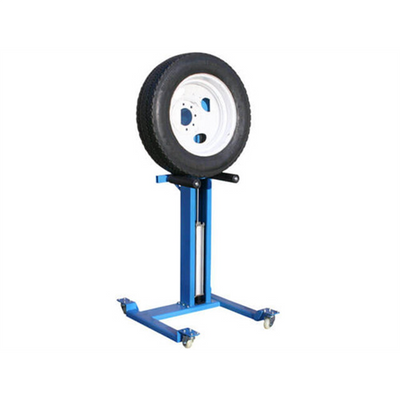
A wheel lift raises the wheel and tire to the height of the balancer shaft so your tech can slide it on without lifting it by hand. When the balance is done, it lowers the wheel back down. It's a simple tool that makes a big difference with heavy wheels.
Signs you need one
- You balance a lot of light truck, SUV and off-road wheels
- You work on large custom wheels with big, heavy tires
- You balance commercial or fleet wheels
- Your techs are balancing all day, and the strain adds up
- You want one tech to handle heavy wheels safely without help
If you mostly balance standard passenger car wheels, you can probably skip it.
Built-in or portable?
Built-in wheel lifts are part of the balancer. The Bright CB460B has one built in, and it handles wheels up to 441 lbs. That makes it a great choice for shops that balance both cars and trucks.
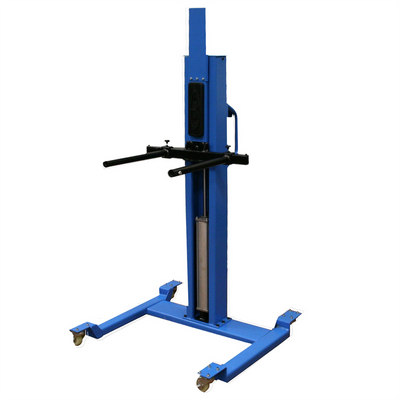
Portable wheel lifts roll up to the balancer you already own. They're a great upgrade for an existing setup.
| Portable wheel lift | Capacity | Power |
|---|---|---|
| Atlas Pneumatic Wheel Lift | 180 lbs. | Shop air, 120 PSI |
| Atlas Offset Pneumatic Wheel Lift | 180 lbs. | Shop air, 116 to 145 PSI |
| Atlas Battery Offset Wheel Lift | 145 lbs. | 24V battery, about 200 cycles per charge |
| Atlas Heavy Duty Battery Wheel Lift | 260 lbs. | 24V battery, about 300 cycles per charge |
Pneumatic lifts run on shop air and are a simple, affordable choice. Battery lifts don't need an air hose, so they're easy to roll anywhere in the shop, and they charge on a standard 110V outlet.
More than just saving your back
- Faster balancing: less wrestling means more wheels per hour
- More accurate: a wheel that slides on straight is easier to center correctly
- Fewer accidents: no dropped wheels, damaged shafts or pinched fingers
- Easier staffing: any tech can handle heavy wheels on their own
Our take
If heavy wheels are a regular part of your work, a wheel lift is one of the best investments you can make in your techs. If you're buying a new balancer and see a lot of truck wheels, a balancer with a built-in lift like the CB460B is the cleanest setup. If you already have a balancer you like, add a portable lift.
See one in action
Visit our showroom in Daleville, Indiana to try a wheel lift with a heavy wheel, or call us at 765-544-3838 and we'll help you pick the right one for your balancer.
Browse all wheel lifts, or read Car vs. Truck Wheel Balancers.
Products in this guide



Related guides

Car vs. Truck Wheel Balancers: Which Do You Need?
Car and light truck balancers handle wheels up to about 150 to 165 lbs. If you balance commercial or heavy truck wheels, you need a car a...

2D, 3D, or Laser: Which Wheel Balancer Features Actually Matter?
Most computerized balancers are accurate to within 1 gram. Higher-priced models buy you speed and fewer mistakes: automatic 2D entry for ...
See it in person
Measure, compare, and watch the equipment run at our showroom in Daleville, Indiana.